
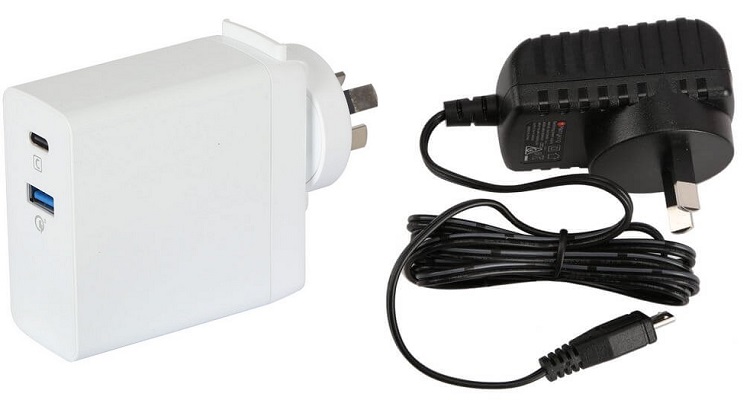
Micro‑USB, limited to 480 Mbps and 2.5 W, struggled with modern multimedia and fast‑charging demands. Its asymmetrical plug caused orientation errors and required multiple cables for power, data and video. USB‑C replaces those constraints with a reversible 24‑pin connector that supports up to 40 Gbps, 100 W power delivery and alternate video modes such as DisplayPort. This unified interface has reshaped laptops, smartphones and accessories and industry regulators now mandate its use, so additional insights for curious readers await.
Key Takeaways
- Micro‑USB limited to 2.5 W power and 480 Mbps data, causing slow charging and fragmented cables.
- USB‑C introduced a reversible 24‑pin design, merging power, data and video into one connector.
- Power Delivery in USB‑C supports up to 100 W, enabling fast charging for laptops, tablets and phones.
- Data rates rose from USB 2.0’s 480 Mbps to USB 3.2’s 10 Gbps and Thunderbolt’s 40 Gbps via USB‑C.
- Global regulators and manufacturers adopted USB‑C, reducing e‑waste and standardizing accessories across devices.
The Evolution of USB‑C: From Micro‑USB to Modern Charging
While early smartphones relied on Micro‑USB connectors, the introduction of USB‑C in the mid‑2010s marked a decisive shift toward universal, high‑speed charging. The new specification featured a symmetrical, reversible plug that eliminated orientation errors, enabling manufacturers to consolidate power, data and video pathways into a single port. Its 24‑pin architecture supported up to 100 W power delivery and data rates of 10 Gbps under the USB 3.2 standard, facilitating rapid charging and high‑resolution video output.
Major operating‑system vendors incorporated USB‑C support early, prompting widespread adoption across smartphones, laptops, tablets and peripheral devices. Regulatory bodies in the European Union later mandated USB‑C as a common charger, reinforcing its role as a de‑facto universal interface. Consequently, the ecosystem converged, reducing e‑waste and simplifying consumer experience for everyday users worldwide.
Micro‑USB Limits: Speed, Power and Compatibility Issues
In contrast to the capabilities of USB‑C, micro‑USB suffered from limited data rates, low power delivery and fragmented compatibility. Its theoretical maximum transfer speed of 480 Mbps under USB 2.0 fell short of emerging multimedia demands, causing noticeable lag when moving high‑resolution video or large backups.
Power output capped at 2.5 W (5 V × 0.5 A) in the standard configuration, restricting fast charging and preventing simultaneous operation of power‑hungry peripherals. Moreover, the asymmetrical plug introduced orientation constraints, increasing wear and user frustration.
Manufacturers often implemented proprietary extensions—such as enhanced charging modes or non‑standard pinouts—to compensate, which fragmented the ecosystem and required multiple cables for different devices. Consequently, micro‑USB became a bottleneck as smartphones, tablets and wearables grew more capable. Its limitations hastened the industry’s shift to a unified, higher‑performance connector.
USB‑C Advantages: Faster Data, Higher Power, Reversible Design
Because USB‑C consolidates data transfer, power delivery and video output into a single reversible connector, it provides up to 40 Gbps with Thunderbolt 3/4 support, far exceeding the 480 Mbps limit of micro‑USB.
It enables 100 W power delivery, allowing laptops, tablets and smartphones to charge at rates previously reserved for proprietary adapters. The protocol supports alternate modes such as DisplayPort and HDMI, delivering 4K video over the same link without additional cables.
Its symmetrical plug eliminates orientation errors, reducing wear and streamlining user experience. Moreover, the unified standard simplifies accessory ecosystems,
USB‑C Impact: New Devices, Accessories and Industry Standards
As manufacturers adopt USB‑C, the landscape of consumer electronics has shifted dramatically, with laptops, tablets, smartphones and even wearables converging on a single, reversible connector.
This unification pushes makers to redesign products while regulators endorse the standard to cut waste and simplify choices.
- Ultrabooks and 2-in-1 convertibles ship exclusively with USB‑C power and Thunderbolt.
- Portable monitors, docking stations and external GPUs use USB‑C for video, data and charging via one cable.
- Power banks, car chargers and magnetic adapters follow USB‑PD, delivering up to 100 W to devices.
- Regulators such as the EU now require USB‑C as the standard charging port for smartphones and tablets sold after 2024.
Collectively, these developments cement USB‑C as the de‑facto interface for hardware, guiding future designs.
Frequently Asked Questions
Will USB‑C Replace All Legacy Ports in the Next Decade?
It is unlikely that USB‑C will replace all legacy ports within the next decade, as entrenched ecosystems, regulatory constraints and specialized interfaces will sustain HDMI, Ethernet and proprietary connectors alongside USB‑C adoption in consumer devices.
How Does USB‑C Affect Device Repair and Right‑To‑Repair Laws?
USB‑C complicates repair by integrating power, data and video into a single, often soldered connector, reducing modularity; consequently, right‑to‑repair advocates argue that manufacturers must provide schematics, tools and non‑proprietary components for consumer maintenance and longevity.
Are There Health Concerns With Higher Power USB‑C Chargers?
Higher‑power USB‑C chargers emit no ionizing radiation and, when used with certified equipment, pose negligible health risks; concerns mainly involve overheating or faulty cables, which can cause burns or fire hazards if mishandled by users.
What Is the Environmental Impact of Transitioning to USB‑C?
The environmental impact of transitioning to USB‑C includes reduced e‑waste, lower material use, but manufacturing and disposal of new cables cause emissions; overall net benefit depends on adoption speed and recycling programs, policy, incentives, globally.
Can USB‑C Be Used for Video Output on Any Device?
USB‑C can deliver video, but only when the host implements an Alternate Mode such as DisplayPort or HDMI or other compatible standards; devices lacking that support will not output video despite using the same connector.
Conclusion
The transition from micro‑USB to USB‑C marks a decisive shift in charging and data standards. By eliminating asymmetrical connectors, USB‑C resolves legacy speed and power constraints, delivering up to 100 W and multi‑gigabit transfer rates. Its universal adoption across smartphones, laptops and peripherals streamlines accessory ecosystems and reduces electronic waste. As manufacturers embed the protocol into emerging technologies, the industry consolidates around a single, future‑proof interface, reinforcing USB‑C’s role as the dominant connectivity solution for consumers.
Next USB-C charger article: Why USB-C Is the Future of Charging
Previous USB-C charger article: The Evolution of Charging Technology: From Micro-USB to USB-C
Please also read our Ultimate USB-C charger guide right here at www.stormscale.net and be sure to check out our USB-C charger reviews for more detailed reviews of USB-C chargers and USB-C cables.