
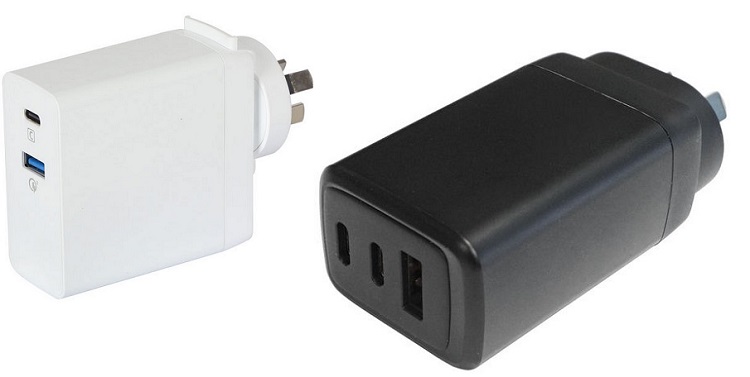
USB‑C unifies power, data, and video in a single reversible connector, allowing up to 100 W of delivery and 40 Gbps transfer. Its compact design fits thin devices, while robust pins endure frequent use. Adaptive Power Delivery negotiates optimal voltage for each gadget, preventing over‑charging and extending battery life. The universal plug eliminates multiple chargers, cutting e‑waste and simplifying travel. Major brands such as Apple, Samsung, Google and Microsoft have already adopted it and further details await.
Key Takeaways
- Single reversible connector combines power, data, video, reducing clutter and simplifying device ecosystems.
- Supports up to 100 W Power Delivery, enabling fast charging for smartphones, laptops, and gaming consoles.
- Universal standard adopted by major manufacturers, ensuring cross‑device compatibility and eliminating proprietary chargers.
- Enables adaptive charging protocols that negotiate optimal voltage and current, protecting batteries and extending lifespan.
- Reduces e‑waste and carbon footprint by replacing multiple chargers with one versatile cable.
Why USB‑C Is the Future of Charging
Because it consolidates power delivery, data transfer, and video output into a single reversible connector, USB‑C eliminates the need for multiple cables and adapters, streamlining device ecosystems. The connector’s compact profile suits thin smartphones, ultrabooks and wearables, while its 24‑pin architecture supports up to 100W of power and 40 Gbps data rates.
International standards bodies endorse USB‑C as a universal interface, encouraging manufacturers to adopt a single port across product lines. Regulatory mandates in several regions require new devices to include USB‑C for charging, accelerating market convergence.
Consumers benefit from reduced electronic waste, as a single charger can service diverse gadgets. Consequently, supply chains, design cycles and user experiences align around a common, future‑proof solution. Industry analysts predict universal adoption within the next five years.
How USB‑C Advantages Outpace Legacy Ports
While legacy ports require distinct connectors for power, data, and video, USB‑C integrates all functions into a single reversible interface. This consolidation reduces cable clutter and eliminates the need for multiple adapters.
USB‑C supports up to 100 W of power delivery, enabling rapid charging of laptops, tablets, and smartphones from a compact charger. Simultaneously, it offers data rates up to 40 Gbps, surpassing older standards such as USB‑A and HDMI in throughput. The connector’s symmetrical design removes orientation errors, improving user experience.
Additionally, the port’s ability to carry alternate protocols, such as DisplayPort and Thunderbolt, provides high‑resolution video and peripheral connectivity without extra hardware. Consequently, manufacturers can design slimmer devices while delivering superior performance. The robust construction also withstands frequent insertions, extending port lifespan under demanding use daily.
How Universal Compatibility Simplifies Your Devices
With a single USB‑C cable, users can power and transfer data across smartphones, laptops, and accessories alike. The uniform connector eliminates the need for multiple adapters, reducing clutter and confusion. Consequently, switching between gadgets becomes instantaneous, streamlining daily workflows.
One Cable, All Devices
Although early charging solutions demanded distinct adapters for each gadget, USB‑C consolidates power delivery and data transfer into a single, reversible connector that works with smartphones, laptops, tablets, and numerous peripherals.
| Device | Power (W) |
|---|---|
| Smartphone | 18 |
| Tablet | 30 |
| Laptop | 65 |
Manufacturers adopt the standard because it eliminates the need for proprietary chargers, allowing consumers to purchase a single cable that powers a diverse ecosystem. The unified connector reduces desk clutter, travel baggage, and e‑waste, while simplifying inventory for businesses. With USB‑C, a 100‑W power‑delivery adapter can charge a laptop, feed a monitor, and replenish a phone without swapping accessories. This versatility also supports fast data rates, enabling one cable to transfer files, stream video, and provide peripheral connectivity simultaneously. It future‑proofs personal tech everywhere.
Seamless Switching Between Gadgets
The universal USB‑C interface lets a single charger be plugged into any compatible device, so switching from a phone to a laptop requires no additional accessories. Users can move the charger between tablets, earbuds and portable monitors without hunting for distinct plugs.
How USB‑C Benefits Include Faster Power Delivery
USB‑C connectors can transmit up to 100 W, far exceeding the limits of legacy ports. Integrated adaptive charging protocols negotiate the optimal voltage and current for each device, preventing over or under‑charging. As a result, users experience noticeably shorter charging cycles across smartphones, laptops and accessories.
Higher Wattage Capacity
Power delivery through USB‑C can exceed 100 W, allowing laptops, monitors, and gaming consoles to charge at rates previously limited to proprietary adapters. This high‑wattage capability stems from the USB Power Delivery (PD) specification, which negotiates voltage and current up to 20V and 5A.
By consolidating power and data in a single reversible connector, manufacturers can eliminate bulky brick chargers and simplify cable ecosystems. Users benefit from faster charge cycles, reduced standby power, and the ability to power multiple devices from one source. The standardized interface encourages cross‑compatibility, so a single USB‑C charger can sustain a workstation, a portable monitor, and a high‑performance handheld console without sacrificing performance. Such versatility also reduces electronic waste, as fewer distinct chargers are required for diverse hardware.
Adaptive Charging Protocols
While higher wattage capacity expands the ceiling of power that can be transferred, adaptive charging protocols dynamically negotiate voltage and current to match each device’s real‑time requirements. USB‑C implements standards such as Power Delivery (PD) and Programmable Power Supply (PPS), allowing a charger to query a device’s battery chemistry, temperature, and load before settling on an optimal profile. This bidirectional communication prevents over‑voltage stress and under‑utilization, extending component lifespan. Manufacturers embed firmware that continuously recalibrates the power envelope as usage patterns shift, ensuring efficient energy transfer across laptops, tablets, and wearables. The table below summarizes key protocol attributes.
| Protocol | Max Voltage | Negotiation Method |
|---|---|---|
| USB‑PD | 20 V | Bidirectional digital handshake |
| PPS | 21 V | Continuous voltage adjustment |
| QC 3.0 | 12 V | Incremental voltage stepping |
It future‑proofs modern devices today.
Reduced Charging Time
The integration of high‑wattage delivery and dynamic negotiation enables significantly shorter charge cycles, as devices can draw the maximum safe power at any moment. USB‑C implements the USB Power Delivery (PD) protocol, which supports up to 100 W and negotiates voltage and current in real time.
When a compatible charger and device communicate, the charger raises voltage from 5 V to 20 V and current to 5 A, compressing the energy transfer window. This eliminates the prolonged low‑power phases typical of legacy micro‑USB connections.
Laptops, smartphones, and tablets therefore reach 80 % capacity in under an hour, compared with two‑hour cycles on older standards. Plus, the reversible connector reduces user error, ensuring optimal alignment for the highest power profile without manual configuration. Thus, productivity gains become immediately measurable overall.
Why USB‑C Sustainability Reduces E‑Waste
Because USB‑C consolidates data transfer, video output, and power delivery into a single reversible connector, manufacturers can phase out multiple proprietary chargers, thereby decreasing the number of discarded accessories each year. Studies show that each eliminated proprietary charger saves an average of 150 g of mixed materials, reducing landfill pressure and lowering carbon emissions associated with production and transport. The table below illustrates typical USB‑C accessory categories and their relative waste contributions.
| Component | Weight(g) | Impact |
|---|---|---|
| Cable | 5 | Low |
| Adapter | 20 | Medium |
| Dock | 150 | High |
| Charger | 120 | High |
Replacing three legacy chargers with one USB‑C unit reduces plastic use by roughly 70 % per user overall impact. By encouraging reuse of a single charger across devices, the industry can cut cumulative e‑waste by billions of kilograms annually.
Which Major Brands Are Switching to USB‑C Now?
Momentum builds as leading manufacturers transition their flagship devices to USB‑C, aligning with regulatory mandates and consumer demand. Apple introduced USB‑C on its iPhone 15 series and all new iPad Pro models, ending its Lightning era.
Samsung migrated its Galaxy lineup and recent Galaxy Tab S9 tablets to USB‑C, citing faster data rates and EU compliance. Google equipped Pixel 8 devices with USB‑C, reinforcing the standard across its smartphone and Chromebook portfolios.
Microsoft released Surface Laptop Studio 2 and Surface Pro 10 with USB‑C ports, consolidating connectivity. Huawei’s Mate 60 Pro and Nova 12 series also feature USB‑C, despite ongoing chipset restrictions. Lenovo and Dell have standardized USB‑C charging on flagship laptops, while Sony’s Xperia 1 V adopts the connector for audio and video output. Collectively, these moves accelerate universal adoption in the near term.
Frequently Asked Questions
Can USB‑C Transmit Video to 8K Displays?
Yes, USB‑C can transmit video to 8K displays, provided the cable and host device support the required bandwidth—such as Thunderbolt 4 or USB4 with DisplayPort 2.0, delivering up to 48 Gbps and the monitor must support the standard.
Is USB‑C Safe for High‑Temperature Environments?
USB‑C connectors remain safe up to approximately 85 °C (185 °F) operating temperature; beyond that, insulation degradation and signal integrity loss may occur, so manufacturers recommend using heat‑resistant cables and avoiding prolonged exposure in industrial settings applications.
Do All USB‑C Cables Support the Same Power Levels?
Not all USB‑C cables support identical power levels; standard cables often handle up to 60 W (3 A), while premium 5 A cables are rated for up to 100 W, and lower‑quality ones may deliver less under heavy load.
How Can I Identify a Genuine USB‑C Charger?
A genuine USB‑C charger can be identified by verifying the manufacturer’s logo, checking for USB‑PD certification marks, confirming the printed wattage matches specifications, examining the cable’s e‑marker chip, and using a reliable digital power meter.
Will USB‑C Eventually Replace the Headphone Jack?
It is likely that USB‑C will eventually replace the headphone jack, as manufacturers consolidate ports, but widespread adoption hinges on consumer preferences, audio accessory compatibility and the persistence of legacy devices across markets global ecosystem.
Conclusion
USB‑C’s rapid adoption signals a decisive shift toward a universal charging ecosystem. Its superior power delivery, data speeds and reversible design outstrip legacy connectors, while cross‑device compatibility curtails cable clutter. Environmental benefits arise from reduced e‑waste as fewer adapters are needed. Major manufacturers, from Apple to Samsung and Dell, have already committed to USB‑C, reinforcing its status as the industry standard. Continued convergence promises streamlined user experiences and a more sustainable technology landscape in the near future.
Next USB-C charger article: What Is USB-C? Everything You Need to Know
Previous USB-C charger article: The Evolution of Charging Technology: From Micro-USB to USB-C
Please also read our Ultimate USB-C charger guide right here at www.stormscale.net and be sure to check out our USB-C charger reviews for more detailed reviews of USB-C chargers and USB-C cables.